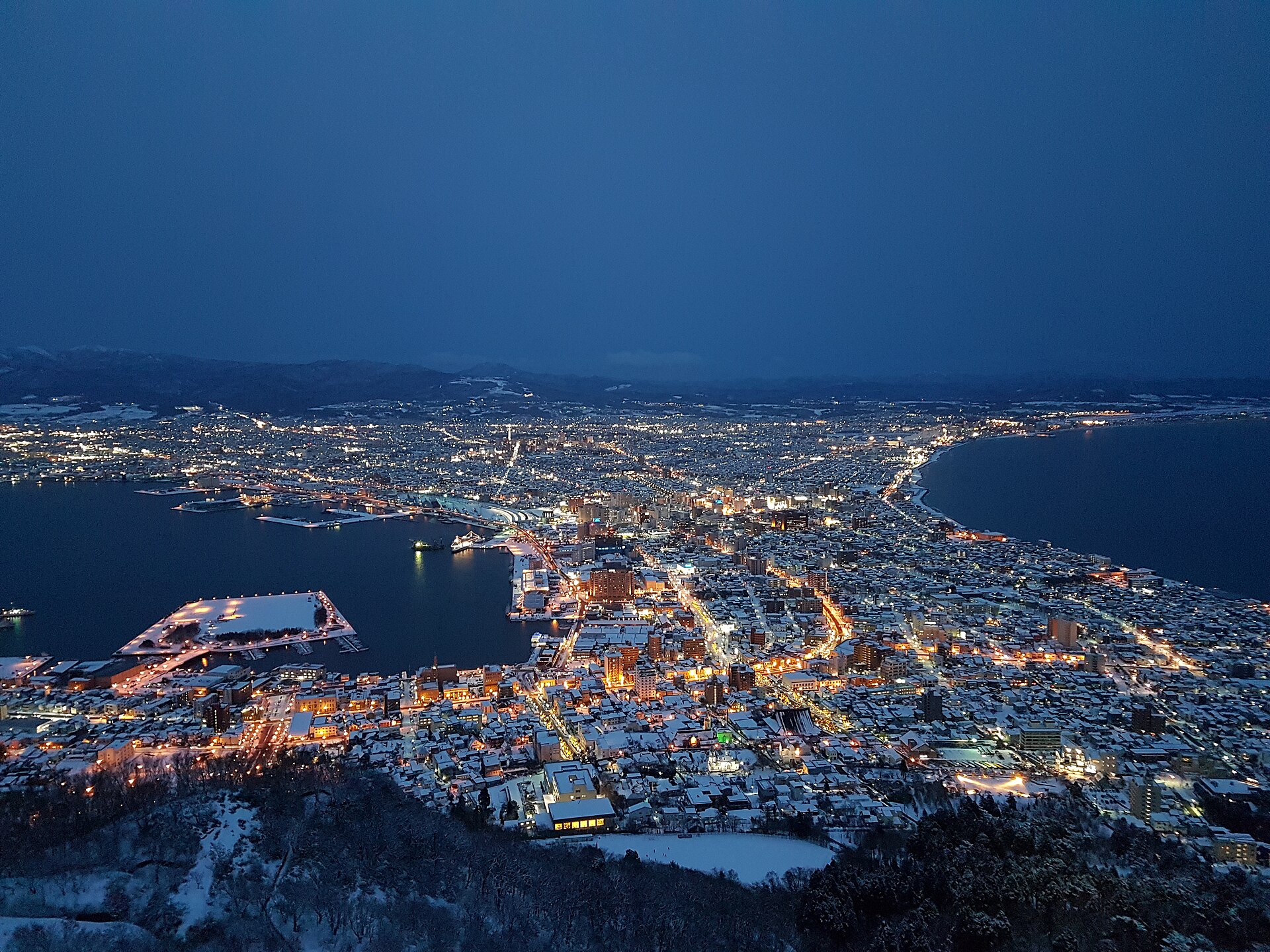
Mt. Hakodate Japan: Where City Lights Become Pure Magic
The night sky just dropped the most stunning view, and you’ll understand why Japan’s travelers never stop replaying it. You’re standing on an observation deck 334 meters above Hakodate City, the wind biting at your cheeks, and suddenly the entire world below ignites with millions of lights. This is Mt. Hakodate Japan—not just a mountain, but the place where everyday reality transforms into something suspended between earth and dream.
The Moment You Arrive at Mt. Hakodate
The glittering evening cityscape unfolds beneath Mount Hakodate’s vantage point, with the urban landscape seamlessly blending into the surrounding bay. This stunning twilight perspective captures why the mountain has earned its reputation as one of Japan’s top three night views.

You step off the ropeway and feel the cold night air wrap around you like silk. The silence is almost shocking—no engines, no crowds, just the whisper of wind through the mountain air and the soft hum of the city breathing below. Your eyes adjust to the darkness, and then they see it: Hakodate Bay curves below in a perfect crescent, its edges traced in golden fire. The city spreads out like someone spilled a box of jewels across black velvet, each light a story, each glow a life being lived in the buildings below.
The observation deck is packed with people holding cameras and phones skyward, but somehow it doesn’t feel crowded. Everyone is quiet, reverent. You can feel the collective awe hanging in the cold air. Winter starlight glints off snow-capped mountains in the distance, and for a moment, you forget you’re in modern Japan. You’re somewhere timeless.
What Makes Mt. Hakodate Travel Guide Worthy
The distinctive star-shaped outline of Goryokaku Fort commands the landscape, a historic landmark visible from various points around Hakodate. This nearby attraction complements any Mount Hakodate visit with its fascinating blend of samurai history and scenic park surroundings.

Here’s what gets under your skin about Mt. Hakodate Japan: it’s a 360-degree panorama that shifts and changes depending on where you stand. Look north and you see mountains cloaked in soft starlight. Turn south and Hakodate Bay glows with golden light reflecting off the water, creating a mirror that makes you question what’s sky and what’s city. The ropeway ride itself is an experience—silent and smooth, it carries you upward through the cold darkness, building anticipation with every meter of elevation. By the time you reach the summit, you’re not just visiting a viewpoint. You’re entering a moment suspended between worlds.
What most visitors never realize: on crystal-clear winter nights, the city lights have an almost supernatural clarity because of the cold, dry air. The pollution-free mountain atmosphere acts like a lens, sharpening every light, every shadow, every curve of the bay into something almost too beautiful to be real. Locals will tell you that winter nights after fresh snow are absolutely transcendent—the landscape sparkles with crystalline intensity that photographs can never quite capture.
The Best Time to Visit Mt. Hakodate
Yes, you can visit Mt. Hakodate Japan year-round, and each season whispers its own magic. Summer arrives with golden sunlight bathing the city in warmth, and you can see for kilometers across blue water and distant islands. Autumn wraps the mountain in crisp mist, and the leaves burn orange and red across the surrounding valleys. Spring brings cherry blossoms that seem to float between the observation deck and the city below. But winter—winter is when this mountain becomes otherworldly.
Winter nights transform Mt. Hakodate into pure enchantment. The cold air is crystalline and clear, the darkness absolute, and the city lights burn with intensity that summer’s haze can never match. Snow often crowns the distant peaks, catching starlight, and the entire scene glows with dreamlike brilliance. Plan to visit between December and February for the most stunning night views, ideally on a clear evening after fresh snow. Even if you’re visiting during other seasons, don’t skip the night experience—it’s worth the trip alone.
How to Get There from Tokyo
Getting to Mt. Hakodate Japan is easier than you’d think. From Tokyo, catch the Shinkansen (bullet train) to Shin-Hakodate-Hokuto Station—it takes about 4 hours and feels like time travel itself, watching Japan blur past at 320 kilometers per hour. From there, hop on the local train to Hakodate Station (about 15 minutes), then take a streetcar or taxi to the base of the mountain. The whole journey from central Tokyo takes roughly 5-6 hours, which means you could have breakfast in Tokyo and be watching the sunset paint Hakodate Bay by evening. The ropeway is right there at the mountain’s base, waiting to carry you skyward.
Secrets Only Locals Know
- 🌅 Best time of day: The hour just after sunset is when the magic truly happens. The city lights ignite as the last blue light drains from the sky, creating a twilight show that lasts about 30 minutes. This is when locals come, when the light is most photogenic, when the entire city seems to wake up.
- 📍 Hidden spot on the observation deck: The northern corner of the outdoor deck (away from the souvenir shop) offers a quieter vantage point where you can hear the bay wind and feel genuinely alone—even when the deck is packed with other visitors. It’s where you’ll find the most contemplative travelers.
- 🎒 What to bring: Dress warmer than you think necessary—the wind at the summit is significantly colder than the city below. A thermal layer, windproof jacket, and gloves are non-negotiable in winter. Also bring a phone or camera fully charged, but give yourself at least 15 minutes where you’re not taking photos. Just looking. Just being.
- 🍜 Local food experience: After descending, head to the historic Motomachi district near the base of the mountain and find a small ramen shop or seafood restaurant. Hakodate is famous for asari clam ramen and fresh squid—comfort food after a transformative mountain experience tastes like memory itself.
Your Japan Story Starts Here
This is why you dream about Japan. Not just the mountains or the temples or the perfect gardens, but moments like this—standing suspended between earth and sky, watching millions of lights create a geography of human life, feeling the cold air remind you that you’re alive and witnessing something beautiful. Mt. Hakodate Japan doesn’t just give you a view. It gives you a story you’ll replay in your mind on quiet nights for years to come, the way the lights glow just so, the way the starlight caught those distant peaks, the way your breath froze in the winter air while the entire city sang below you.
This mountain knows something about transformation. It knows that the ordinary becomes extraordinary when you climb high enough to see it from a distance. Every light below is someone’s home, someone’s dream, someone’s moment. And from up here, it all becomes poetry.
✈️ Planning your Japan trip? Follow us for daily hidden gems—places most tourists never find. Drop your dream Japan destination in the comments below. 🗾
Frequently Asked Questions
Is Mt. Hakodate worth visiting?
Absolutely. Mt. Hakodate Japan offers one of the world’s most stunning city-and-bay panoramas, especially at night when the winter landscape becomes genuinely transcendent. If you’re visiting Hokkaido, this mountain is non-negotiable—it’s the kind of view that redefines what you thought Japan could be.
How long should I spend at Mt. Hakodate?
Plan for 2-3 hours total: 20 minutes on the ropeway ride up, 90 minutes to 2 hours on the observation deck experiencing different angles and light changes, and 20 minutes descending. If you’re arriving at sunset, give yourself extra time to watch the twilight transition into night—that magical hour is worth savoring slowly.
What is the best season for Mt. Hakodate?
While Mt. Hakodate Japan is beautiful year-round, winter (December-February) offers the most magical night views. The cold air creates crystalline clarity, fresh snow on distant peaks glows under starlight, and the city lights burn with supernatural intensity. However, if you’re visiting during summer or autumn, don’t skip it—just plan an evening visit for the best experience with city lights.
“`
“`json